
Every Monday morning, while pupils and students in much of the world head to school as usual, streets in Bamenda remain largely deserted because of ongoing insecurity fuelled by the Anglophone crisis. The Anglophone crisis is an ongoing conflict between the Cameroon government and separatist in the two English regions of Cameroon seeking independence. Separatist fighters who sought independence for the English-speaking regions of Cameroon used education disruption to pass across their message to the government and parents who insisted on sending their kids to school faced consequences. The anglophone crisis is generally viewed by authors as a complex outcome of unresolved historical issues, cultural and institutional differences, political marginalization, and a violent conflict over self-determination and the nature of the Cameroonian state.
Instead of sitting in classrooms, a group of final-year students log into an online lesson determined not to let Cameroon’s Anglophone crisis end their education. For close to a decade now, violence in Cameroon’s English-speaking North West and South West regions has crippled the education system, forcing thousands of schools to shut down and disrupting learning for an entire generation.
Bamenda, the capital of Cameroon's North West region was once a thriving educational hub, known for its numerous standard institutions of learning and academic excellence. Bamenda was home to several prestigious schools which attracted students from across the country and beyond.
According to statistics, over 4,000 schools have been closed in the North West region while children in the region have lost an average of at least three-and-a-half years of schooling due to the crisis.
A December 2021 report by Human Rights Watch said separatist groups in Cameroon,s English-speaking Northwest and southwest regions have, since 2017, killed, beaten, abducted, threatened and terrorised students and education professionals.
The ongoing crisis in the region has crippled the educational landscape,forcing many schools to close down, leaving those still operating to contend with damaged infrastructure and disruptions to their academic calendar amongst others.
as many schools have been forced to close while those that remain open are facing numerous challenges including damaged infrastructure and disruptions in academic calendars amongst others.
Despite all these, educators and institutions of learning in Bamenda are finding ways to adapt, turning to innovation and improvisation to keep learning alive.showcasing remarkable resilience and innovation in education.
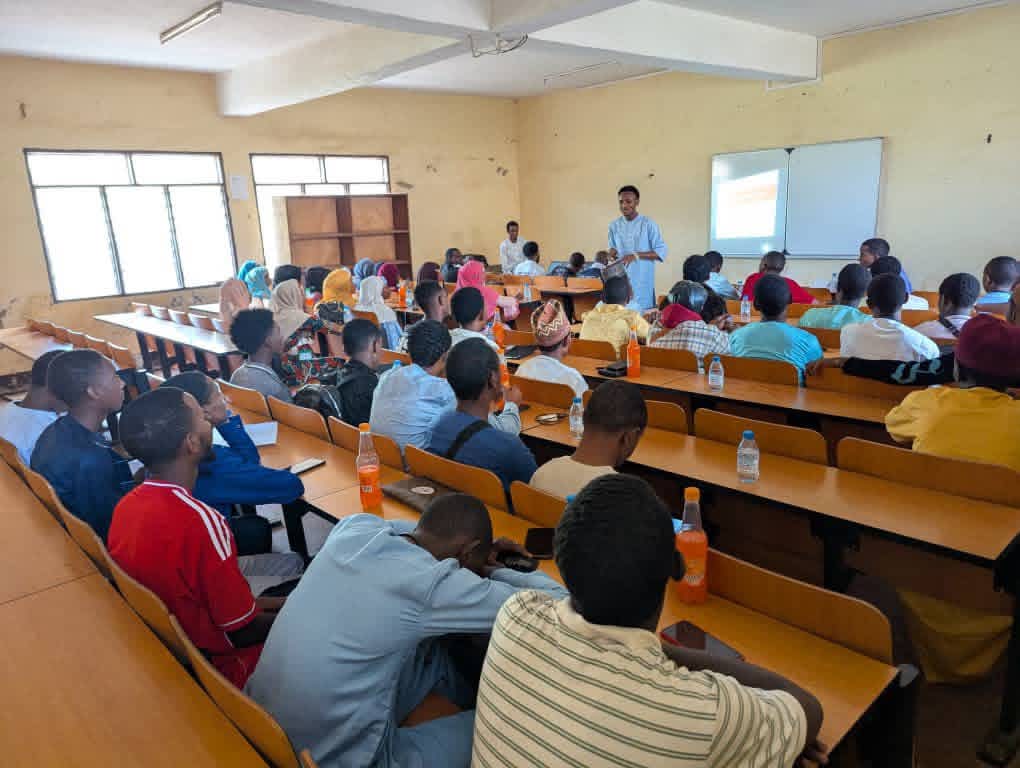
The University of Bamenda is leading the way for its resilient and innovative methods. The institution recently launched a Digital Centre, which is revolutionizing teaching and learning. This state-of-the-art facility is a presidential gift to higher education and will enhance education accessibility and effectiveness. The centre's arrival coincides with the launch of TAGDev 2.0, a project that aims to promote transformative education, workplace immersion, and problem-based learning.
Even before the launch of the Digital centre, The University of Bamenda had begun shifting to remote. The coronavirus pandemic which broke out in - contributed to the university introducing the Learning management system, LMS in 2019, a system that allows lecturers to upload course work materials. The System allowed students to read through those materials and submit assignments.
At Government Bilingual High School Down Town Bamenda, Geography teacher Ajih Mathias said he has adopted other teaching methods that offsets learning losses caused by recurring “ghost town”lockdowns, when denizens are forced to stay indoors.
"Since the escalation of the crisis, I have decided to have online classes on Mondays with students of Upper sixth in particular. This enables us to try to cover the syllabus", he said. This measure, he says though not 100% efficient, tries to bridge the gap created by the numerous ghost towns.
In the Banja Street neighborhood in Nkwen Bamenda III subdivision, school administrators of primary schools like Heritage Grade School and Good Shepherd Primary School, have now made Saturdays a normal school day for all pupils to recover for lost times. In the past, this measure applied just for pupils of examination classes.
Beyond schools, local and international organizations are stepping up to prevent education from collapsing entirely. Hope for Better Future (H4BF) and SHUMAS have trained educators in rapid educational response preparedness, quick assessment and established a learning center equipped with 30 computers, internet access and basic digital skills training. At a learning resource center in Bamenda, dozens of students and teachers now share access to just 30 computers, often their only connection to online education.
Local efforts in Bamenda by the Luena Foundation and other organizations have distributed school supplies like books, bags, writing materials to displaced children to increase attendance and participation in schools that remain open.
The Cameroon Education Cluster, involving humanitarian partners, is actively tracking responses and reaching out to families and vulnerable children with grants and support packages that help keep students in learning environments despite ongoing insecurity.
While insecurity and violence continue to shape the lives of learners, educators and residents in Cameroon Anglophone regions and towns, Bamenda’s educators, students, and community groups are carving out space for learning against the odds,proving that amidst conflict, education is still key to a better future.
These initiatives demonstrate Bamenda's commitment to educational resilience and innovation, ensuring students continue to learn and thrive despite adversity.
By Nji Nelson Chefor