More than 50 young leaders drawn from different parts of Cameroon have been brought together to examine how young people can play a greater role in peacebuilding, climate action and community recovery in conflict-affected areas.
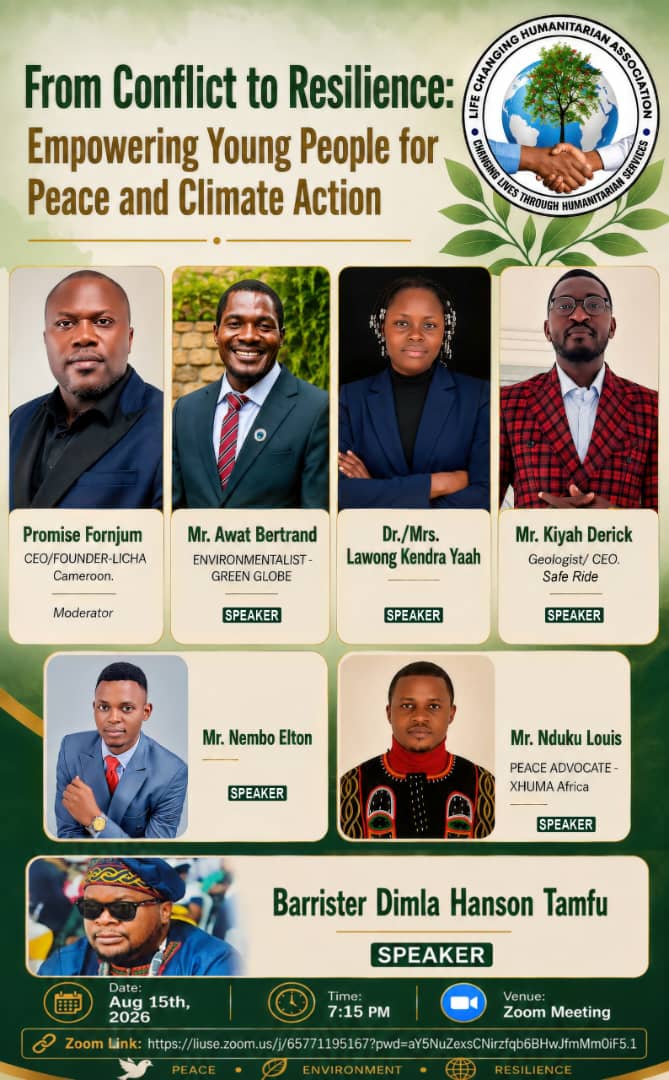
The engagement was organised by LICHA Cameroon in partnership with Xhuma Africa to commemorate International Youth Day under the theme “From Conflict to Resilience: Empowering Young People for Peace and Climate Action.”
The programme sought to strengthen the capacity of young people living and working in communities affected by conflict, enabling them to become more effective actors in promoting peace, responding to environmental challenges and building resilient communities.
The organisers structured the programme around three key pillars: Peace, Climate and Resilience.
Under the Peace pillar, participants were equipped with knowledge and practical approaches to dialogue, non-violent communication, conflict prevention and social cohesion.
The organisers said strengthening these skills among young people was important in communities where conflict has affected relationships, livelihoods and social cohesion.
The second pillar focused on climate action. Young participants were introduced to issues surrounding climate adaptation, environmental protection and green initiatives, with emphasis on practical ways through which they can contribute to addressing environmental challenges within their communities.
The third component, resilience, sought to encourage and support youth-led initiatives capable of tackling several challenges at the same time, including conflict, vulnerability, environmental degradation and community recovery.
Presentations and discussions during the programme were led by experts from diverse professional backgrounds, including environmentalists, peace advocates and mediators, as well as academics from Cameroon and abroad.
The experts shared experiences and practical knowledge with the youth leaders, creating an opportunity for participants to discuss challenges affecting their communities and explore possible locally driven responses.
For the organisers, young people should not be viewed only as victims or beneficiaries of peace and development programmes, but also as important partners in finding solutions to the challenges facing their communities.
The programme therefore placed emphasis on equipping participants with skills that can be applied beyond the event, particularly through youth-led actions at community level.
The organisers also stressed the connection between peace, environmental protection and resilience, noting that communities affected by conflict often face additional pressures from environmental degradation, displacement and loss of livelihoods.
By bringing together young leaders from different regions of Cameroon, LICHA Cameroon and Xhuma Africa also created a platform for participants to exchange experiences and strengthen networks around peacebuilding and climate action.
The International Youth Day activity ended with a renewed call for greater investment in young people and increased support for initiatives that allow them to take an active part in addressing conflict and environmental challenges.
For the participating youth leaders, the programme provided not only an opportunity to acquire new knowledge, but also a platform to rethink their role in building peaceful, environmentally responsible and resilient communities.
By Neba Jerome Ambe